

Toni Batel: “Let’s Preserve Soil Moisture with Agrosolar Projects. 44% of Total Water Consumption in Europe Goes to Agriculture.”
In an interview for Financije.hr, Toni Batel, an agronomist and director of the agrosolar projects and agricultural innovations sector at Lumos Energy, openly discussed with the journalist from Financije.hr the advantages, challenges, and future of agrosolar solutions in Croatia.
Agrosolar Systems and Increased Productivity
He explained that agriculture and solar energy can coexist symbiotically. Although some fear that solar panels will take up too much arable land, he pointed out that properly placed panels actually support agricultural production and increase efficiency per square meter. Solar power plants are allies for farmers for a number of reasons. He also emphasized how agrosolar systems can, for example, increase agricultural productivity on specific land by up to 20%. He explained that agrosolar power plants are installed between or above crops, on greenhouses, etc., without further disrupting the habitats of animals and plants. He gave the example of lower sugar content in crops protected by solar panels in France, which led to the avoidance of excessive alcohol during fermentation. Agrosolars can provide protection to crops and improve growth conditions, reducing stress from intense sunlight and adverse weather conditions. The panels isolate the crops during lower temperatures and protect them during heatwaves. Droughts during the summer months are the biggest individual cause of damage in Croatian agriculture; from 2013 to 2016, they caused total losses of 400 million euros. More moisture in the soil means less need for irrigation, as the panels also reduce evaporation from the soil.
Ecological and Economic Benefits of Agrosolar
In addition to producing renewable energy, when properly planned, agrosolars provide many benefits, such as protecting crops from adverse climatic impacts like excessive insolation, hail, and other weather conditions. They also reduce emissions in both sectors that contribute the most to climate change through CO2 emissions (agriculture and energy).
The benefits of agrosolars for farmers are multiple: producing electricity for their own needs and potential sales, physical protection of crops from weather conditions, reducing energy costs, and additional income from selling surplus produced energy. Furthermore, combined land use allows for the cultivation of annual and perennial food, fiber, or special crops under and around solar infrastructures, solar grazing, and the creation or restoration of habitats.
Legal Conditions for Installing Agrosolars in Croatia on Agricultural Land Under Permanent Crops
He then explained how the Republic of Croatia recognized the value of agrosolar power plants and, starting in 2023, legally allowed their installation on all agricultural lands under permanent crops registered in the agricultural land use register (ARKOD). They can thus be installed on areas within the existing agricultural property, where the installation of agrosolars achieves the goals of agricultural development, as well as on fish ponds and other land-based fish farms.
Due to the importance of environmental protection, it is not possible to build agrosolars within national parks and nature parks.
To preserve agricultural production, the agricultural purpose of the land must be maintained when installing agrosolars.
Possible Position in Relation to Crops and Types of Panels
He also explained that installing agrosolars is possible above crops, usually 1.8 meters or higher (mainly for berries, grapes, lower fruit trees, and more sensitive vegetables), or between crops (for grasses, cereals, and tougher vegetables).
He confirmed that agrosolar panels are often used in semi-transparent form and with anti-reflective coatings. Agrosolar panels are also rotated to allow more light to reach the crops on cloudy days.
Solar Grazing and Other Activities in Agrosolar Projects
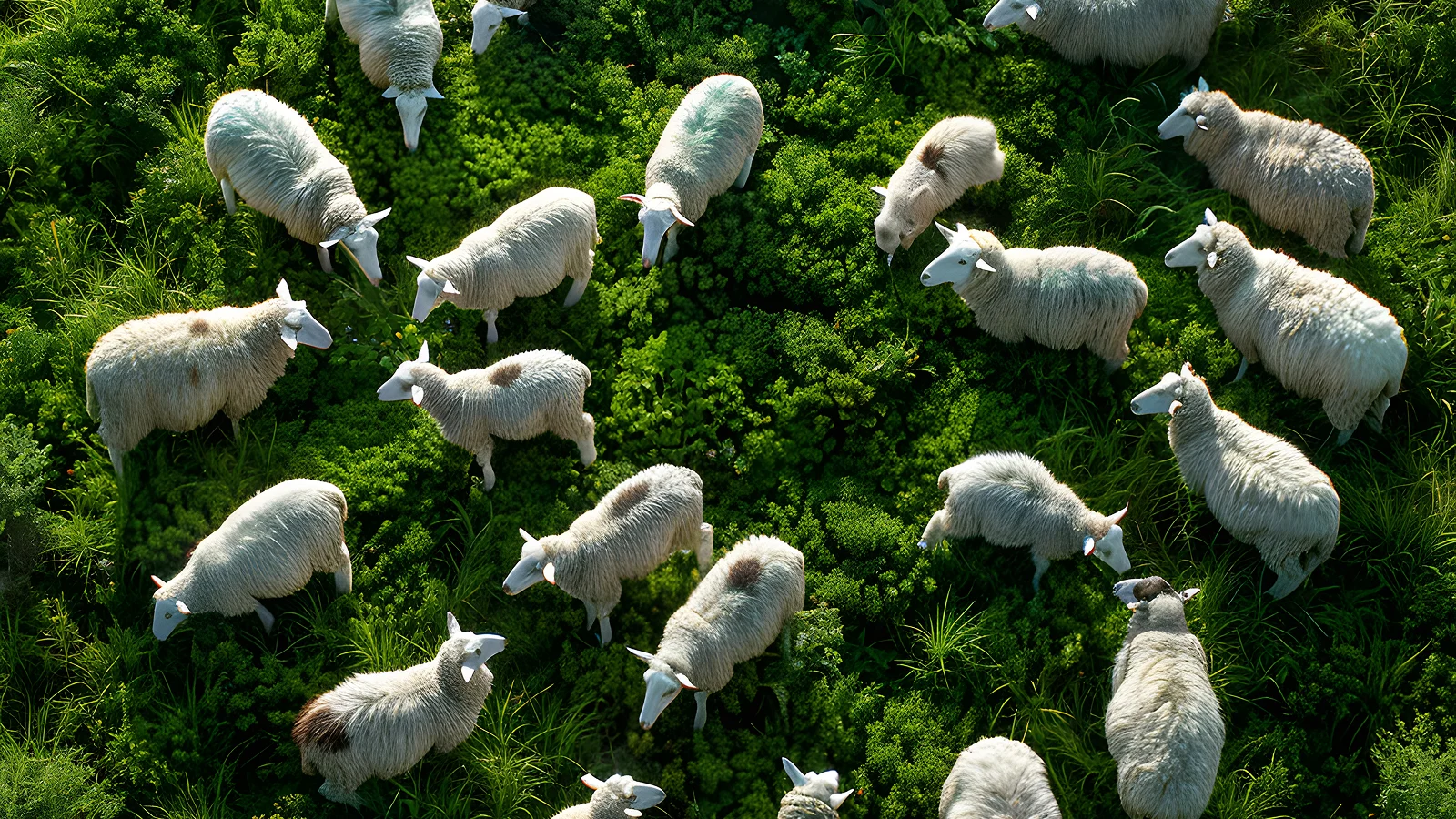
He pointed out that various activities are possible in agrosolar projects—such as cultivating annual and perennial food, fiber, or special crops under and around solar infrastructures, so-called “solar grazing,” which involves grazing and managing animals under, around, and directly next to solar infrastructure (sheep are most suitable). These installations are designed to create or restore habitats, improve soil, and provide other ecosystem services, as well as panels that are placed above or integrated with greenhouse infrastructure to provide partial shade and light modulation. These four activities are not mutually exclusive. Multiple activities can occur at the same location, even at different times of the year.
In the world, for example, it is becoming increasingly common for farmers to use sheep to manage vegetation on large-scale solar sites as an additional source of income. In 2021, Croatia had 654,000 sheep. In the same year, Croatia had 1,669 hectares of berry fruit crops. It would be worth accelerating the use of all these resources available to us.
The Importance of Agronomic Knowledge in Agrosolar Projects
He then explained the measures necessary for installing an agrosolar power plant, such as: analyzing soil quality, a range of other parameters concerning existing agricultural production, the amount of sunlight, as well as considering the non-agricultural part of the project, and designing photovoltaic cells and structures. The goal is to calculate the optimal integration model of one with the other. When planning agrosolar power plants, appropriate studies should be conducted in the areas of pedology, agroecology, agronomy, technology, sociology, and economics.
“Although solar energy can bring enormous benefits, it is important to implement systems that are carefully designed and balanced,” he emphasized. He also pointed out that Lumos Energy provides complete support, from technical assistance to financial advice, enabling farmers to confidently decide to install solar power systems.
Batel also emphasizes that it is important not only to implement solar energy but also to monitor the results through precise data analysis. “At Lumos Energy, we use sophisticated tools to analyze energy production data and crop growth conditions, allowing farmers to optimally manage resources,” Batel notes. These systems allow monitoring of panel performance, as well as soil moisture, temperature, and other key parameters that directly affect agricultural production.
Estimated Investment per Hectare of Land
He concluded that, generally speaking, for a well-executed project, an agrosolar power plant that is profitable, safe, and sustainable requires about three hectares of agricultural land per one megawatt (MW) of installed power. The cost of the solar power plant itself, without structural and substructure elements, ranges from 1,000 to 1,300 euros per kW of installed power. One MW is 1,000 kW, which means it costs between 1,000,000 and 1,300,000 euros.
Regarding land prices, he stated that agricultural land can be leased cheaper only in Slovakia, while the most expensive agricultural land lease is in the Netherlands, averaging 836 euros per hectare per year. With an average price of 74 euros for the annual lease of one hectare of pure agricultural land, excluding buildings and plantations, Croatia is at the bottom of the European Union, according to Eurostat data for 2021.
Crops Most Suitable for Agrosolar Projects
He mentioned that for ecological cultivation of crops up to 1.2 meters high, soy, peas, green manures, and beans are extremely suitable, and these crops have also proven to be highly suitable for solar applications globally. Given that Croatia produces 9.2% of total European soybean production and that the demand for organic products is growing worldwide, the logic of promoting the synergy of organic agriculture and agrosolar power plants in Croatia is evident. In 2021, 1,037 hectares of beans and peas were planted in Croatia. Croatia is yet to start its own projects to collect domestic data.
In some cases, studies are unnecessary. For example, agronomists know that raspberries and blackberries thrive best under partial shading. In nature, there are numerous examples of vegetation in “layers” where different plants compete for light and other biotic factors, but all of them grow successfully.
Example of the Netherlands and Other Developed Countries
He also commented on how it is a shame that Croatia lags so far behind more developed countries. In the Netherlands, one in three houses has a rooftop solar power plant, and the Dutch have long been utilizing the advantages of agrosolar solutions. For example, in North Brabant, just one farmer, Maarten van Hoof, has installed 24,206 panels that protect his raspberries from bad weather while simultaneously producing electricity for as many as 2,810 households. It is indisputable from this and other studies that raspberries thrive much better under semi-transparent panels.
In the end, he stated: “However, I still notice a lot of unnecessary hindering of development in Croatia, baseless skepticism and fear in everything. It somewhat reminds me of the time when Edison killed an elephant, Topsy, with Tesla’s alternating current to prove that his electricity was — safer.”
For the full interview, visit the page: https://financije.hr/agrosolari-u-hrvatskoj-44-tisuce-hektara-pogodnog-tla-za-razvoj-novog-oblika-solarnih-elektrana/
solar engineering, project financing, and technical duel diligence. Learn how to avoid hidden costs, and make your solar project a success from day one.


🤦Avoid “Oops” moments (like hidden costs)
🧠 Outsmart sketchy quotes
💸 Save big — before the first panel goes up!